Foragers Folly
Cinnamon Vine (Apios americana) Quart Pot
Cinnamon Vine (Apios americana) Quart Pot
Couldn't load pickup availability
Hopniss, Cinnamon Vine, Groundnut, Potato Bean, Hodoimo, no matter what you call it, Apios americana is a plant we should all be familiar with.
Hopniss has a rich history in the Americas as both a wild food and cultivated crop. For thousands of years this vine was utilized for its various edible components and even interplanted as a companion in The Three Sisters.
Like other (but not all!) legumes in the Fabaceae family, the roots of the American Groundnut form symbiotic associations with nitrogen fixing bacteria and provide a much needed source of nitrogen for food crops. Monocots like corn, which are heavy nitrogen users, benefit immensely from this companionship.
The roots also form tubers which are commonly referred to as Groundnuts, not to be mistaken with Nutsedge or Chuffa which is sometimes also called groundnut depending on who you're talking to. These tubers are nutty and nutritious. Packed with protein, a quick boil removes the latex and leaves them ready to use like any other root veg. Mashed or pan fried is always a winner.
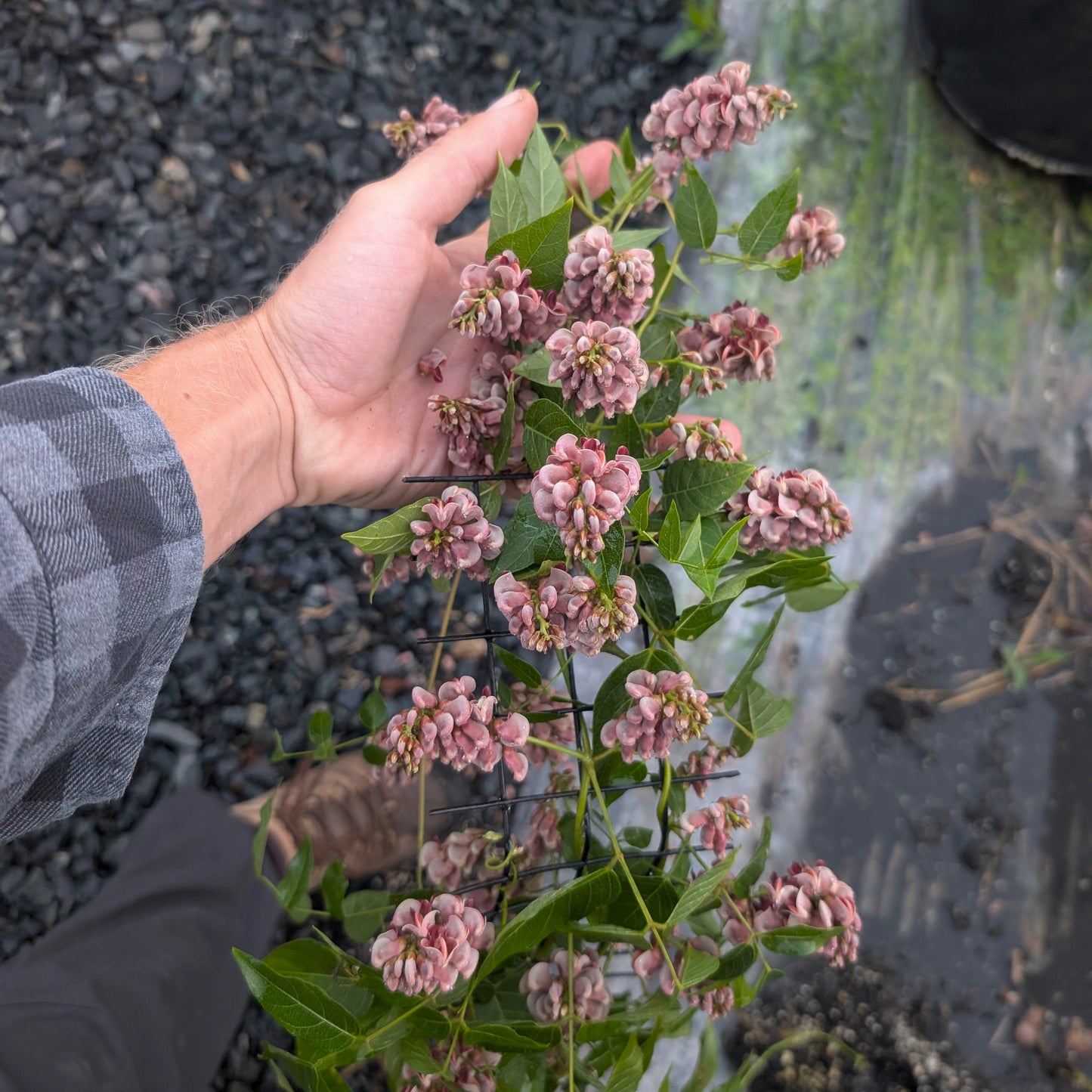
The colloquial name Cinnamon Vine comes from the flowers which have a scent often compared to a faint cinnamon and violet. Similar to squash flowers, these beautiful clusters become a crispy delight when deep fried!
The flowers of the Potato Bean are quite specialized and need small native pollinators to trigger the unique pollination mechanism in the flower. This means honey bees can't access the pollen and nectar source, but your native leaf cutters can! Given the prevalence of honey bees in our community and the massive discrepancy in range between native bees and honey bees, it is important we offer our native pollinators some degree of food security.
From that Pollinator interaction, we are often left with a wonderful string of edible beans. However, due to a quirk of genetics, two varieties of Apios bare distinction. A copy of genetic material created a split between a fertile "Diploid" generation that produces beans and an infertile "Triploid" generation that does not produce beans, but instead has larger tuber production.
Share